The pulp and paper industry is entering a transformative phase. Driven by innovation, sustainability, and increasing global demand, pulp and paper trends in 2025 reflect a new wave of growth and evolution. From eco-friendly practices to automation, the paper industry is adapting to meet changing consumer expectations and regulatory requirements. Let’s explore the top trends that are shaping the paper industry market size, operations, and future outlook.
Surge in Sustainable Paper Production | Pulp and Paper Trends
Sustainability continues to lead the way in 2025. With governments and organizations enforcing stricter environmental regulations, paper mills are investing in eco-friendly solutions. Key developments include:
- Use of recycled fibers and alternative raw materials (like agro-waste and bamboo)
- Reduction in water and energy usage through green technologies
- Carbon footprint reduction by adopting renewable energy sources
Sustainable packaging and biodegradable paper products are gaining popularity, especially in FMCG and e-commerce sectors, influencing the pulp and paper market significantly.
Digital Transformation and Smart Paper Mills | Pulp and Paper Trends
Industry 4.0 is no longer optional. Smart factories are becoming the norm in the pulp and paper industry, with the integration of:
- AI and Machine Learning to optimize production efficiency
- IoT-enabled sensors for real-time monitoring of machinery and process data
- Predictive maintenance to reduce downtime
Automation in paper production not only increases output but also enhances quality control and reduces labor costs.
Increase in Global Paper Consumption | Pulp and Paper Trends
Contrary to the belief that digitalization reduces paper usage, paper demand remains strong in many regions. The paper industry market size is expected to grow in 2025 due to:
- The rise of e-commerce, increasing the need for paper-based packaging
- Growth in hygiene paper (tissue, napkins, etc.) due to health awareness
- Educational sectors in developing nations still relying heavily on printed material
This growth fuels investments in new paper mills and machinery globally.
Rise of Molded Fiber and Paper Packaging Solutions | Pulp and Paper Trends
In response to the plastic ban in many countries, molded fiber and paper-based packaging are gaining traction. Lightweight, durable, and compostable, these solutions are reshaping the packaging landscape. Innovations in pulp molding and fiber strength are making them suitable even for food-grade and industrial applications.
Expansion in Asia-Pacific and African Markets | Pulp and Paper Trends
Emerging economies, especially in Asia-Pacific and Africa, are becoming major contributors to the pulp and paper market. Factors driving this expansion include:
- Urbanization and rising disposable incomes
- Industrial development needing paper-based materials
- Increased literacy rates and educational reforms
Manufacturers are setting up new paper mills in these regions to meet demand locally and reduce export dependency.
Focus on Energy-Efficient Technologies | Pulp and Paper Trends
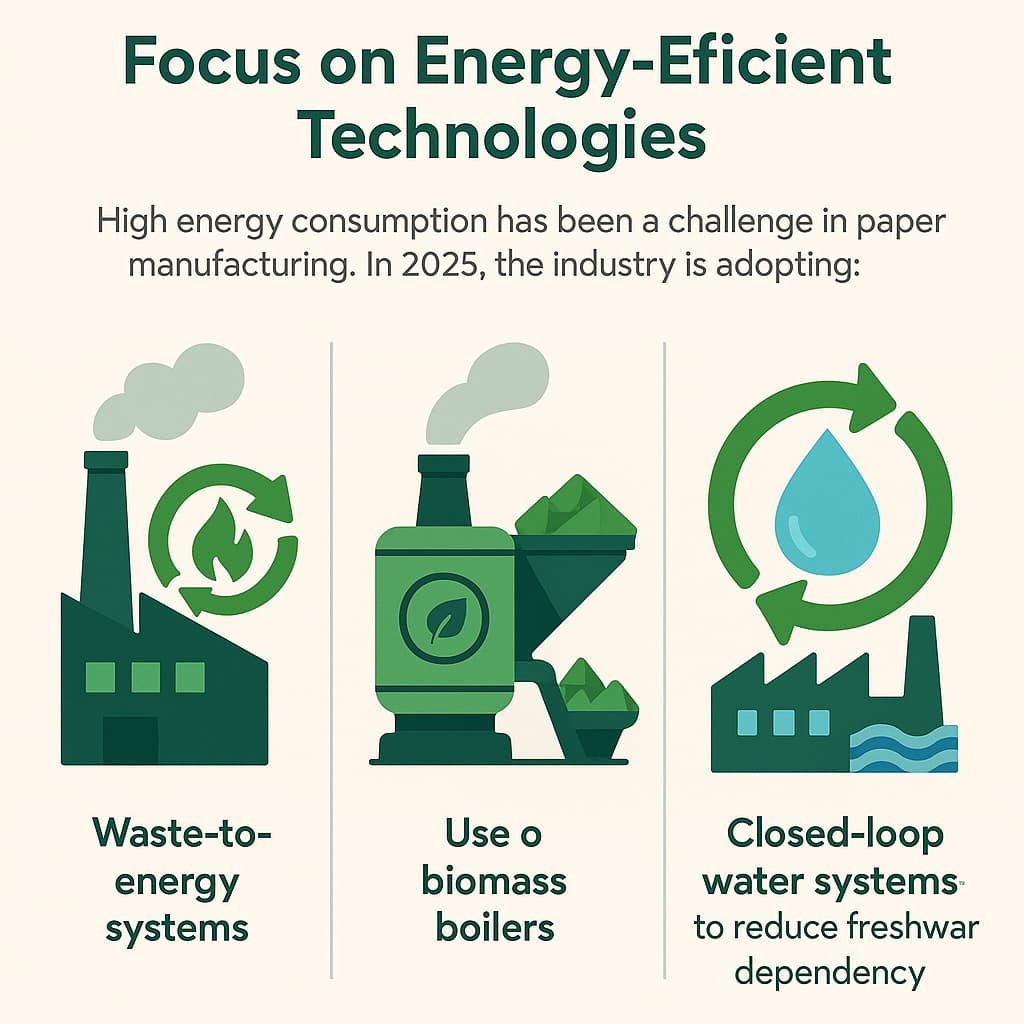
High energy consumption has been a challenge in paper manufacturing. In 2025, the industry is adopting:
- Waste-to-energy systems
- Use of biomass boilers
- Closed-loop water systems to reduce freshwater dependency
These innovations improve sustainability and cost-efficiency, making production more viable in the long term.
Circular Economy and Waste Management | Pulp and Paper Trends
The concept of a circular economy is gaining ground. Major players in the pulp and paper industry are building closed-loop systems where paper waste is recycled back into the supply chain. This reduces landfill waste and improves raw material usage. Moreover, governments are incentivizing recycling practices through policy support and infrastructure development.
Customization and Premium Paper Products | Pulp and Paper Trends
Consumers are increasingly looking for customized and premium paper products. Specialty papers, textured designs, and eco-friendly labels are in demand, especially in the luxury packaging and stationery segments. This trend is pushing manufacturers to diversify their product range and invest in flexible production systems.
Global Trade and Market Consolidation | Pulp and Paper Trends
The paper industry is seeing increased consolidation through mergers and acquisitions. Global players are acquiring regional brands to expand their footprint and benefit from economies of scale. Additionally, fluctuations in raw material prices and global trade policies are influencing import/export dynamics, pushing companies to localize their supply chains.
Greater Emphasis on Compliance and Certifications | Pulp and Paper Trends
In 2025, compliance with global environmental standards is crucial. Certifications like FSC (Forest Stewardship Council), PEFC (Programme for the Endorsement of Forest Certification), and ISO 14001 are becoming must-haves for manufacturers aiming to maintain credibility and access to international markets.
Conclusion
The pulp and paper trends in 2025 showcase an industry that’s balancing growth with sustainability, tradition with innovation. Whether it’s the rising paper industry market size, smarter paper mills, or the shift to eco-conscious production, the sector is poised for a resilient future.
Companies that embrace these trends—especially digital transformation, sustainability, and regional expansion—will not only survive but thrive in the evolving pulp and paper market.
Leave a Reply