Category: Industry trends

  • What Are the Top Pulp and Paper Trends in 2025?

    What Are the Top Pulp and Paper Trends in 2025?

    The pulp and paper industry is entering a transformative phase. Driven by innovation, sustainability, and increasing global demand, pulp and paper trends in 2025 reflect a new wave of growth and evolution. From eco-friendly practices to automation, the paper industry is adapting to meet changing consumer expectations and regulatory requirements. Let’s explore the top trends that are shaping the paper industry market size, operations, and future outlook.

    Surge in Sustainable Paper Production | Pulp and Paper Trends

    Sustainability continues to lead the way in 2025. With governments and organizations enforcing stricter environmental regulations, paper mills are investing in eco-friendly solutions. Key developments include:

    • Use of recycled fibers and alternative raw materials (like agro-waste and bamboo)
    • Reduction in water and energy usage through green technologies
    • Carbon footprint reduction by adopting renewable energy sources

    Sustainable packaging and biodegradable paper products are gaining popularity, especially in FMCG and e-commerce sectors, influencing the pulp and paper market significantly.

    Digital Transformation and Smart Paper Mills | Pulp and Paper Trends

    Industry 4.0 is no longer optional. Smart factories are becoming the norm in the pulp and paper industry, with the integration of:

    • AI and Machine Learning to optimize production efficiency
    • IoT-enabled sensors for real-time monitoring of machinery and process data
    • Predictive maintenance to reduce downtime

    Automation in paper production not only increases output but also enhances quality control and reduces labor costs.

    Increase in Global Paper Consumption | Pulp and Paper Trends

    Contrary to the belief that digitalization reduces paper usage, paper demand remains strong in many regions. The paper industry market size is expected to grow in 2025 due to:

    • The rise of e-commerce, increasing the need for paper-based packaging
    • Growth in hygiene paper (tissue, napkins, etc.) due to health awareness
    • Educational sectors in developing nations still relying heavily on printed material

    This growth fuels investments in new paper mills and machinery globally.

    Rise of Molded Fiber and Paper Packaging Solutions | Pulp and Paper Trends

    In response to the plastic ban in many countries, molded fiber and paper-based packaging are gaining traction. Lightweight, durable, and compostable, these solutions are reshaping the packaging landscape. Innovations in pulp molding and fiber strength are making them suitable even for food-grade and industrial applications.

    Expansion in Asia-Pacific and African Markets | Pulp and Paper Trends

    Emerging economies, especially in Asia-Pacific and Africa, are becoming major contributors to the pulp and paper market. Factors driving this expansion include:

    • Urbanization and rising disposable incomes
    • Industrial development needing paper-based materials
    • Increased literacy rates and educational reforms

    Manufacturers are setting up new paper mills in these regions to meet demand locally and reduce export dependency.

    Focus on Energy-Efficient Technologies | Pulp and Paper Trends
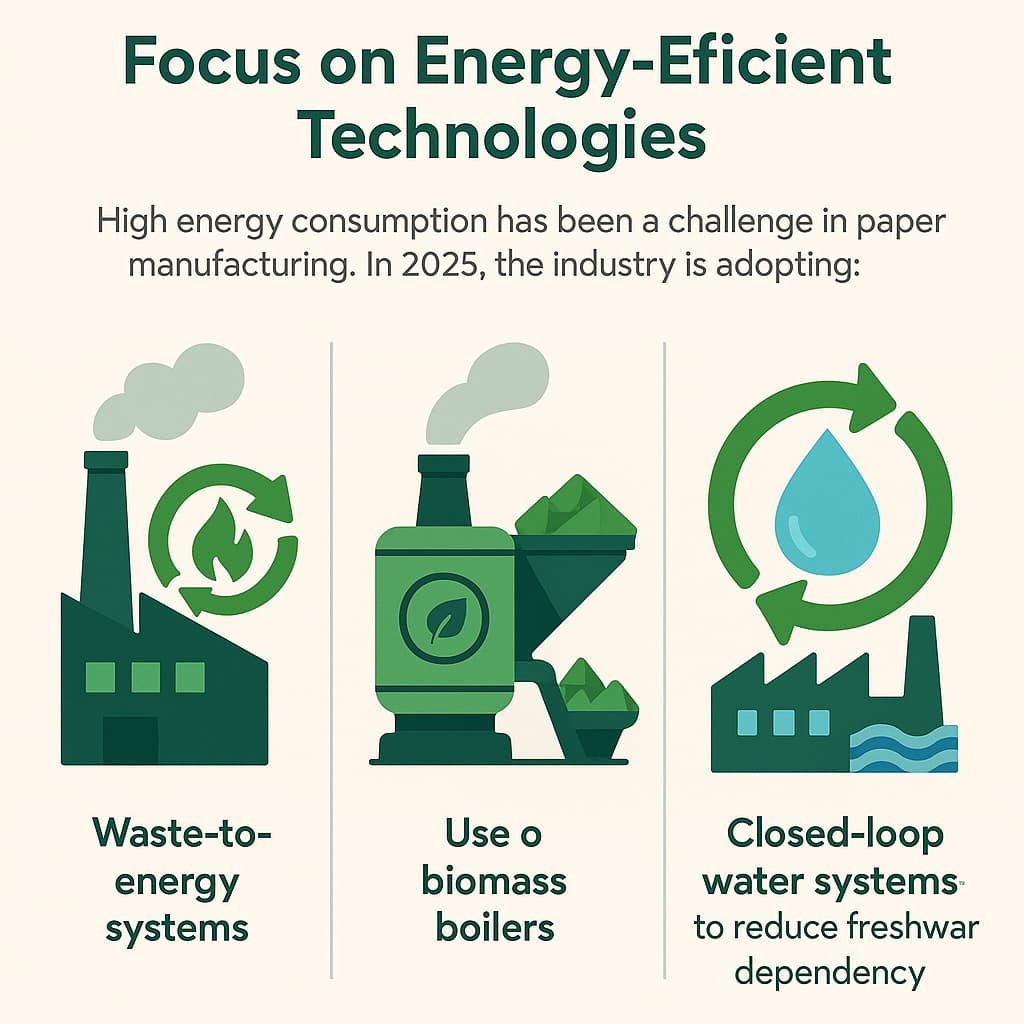
    High energy consumption has been a challenge in paper manufacturing. In 2025, the industry is adopting:

    • Waste-to-energy systems
    • Use of biomass boilers
    • Closed-loop water systems to reduce freshwater dependency

    These innovations improve sustainability and cost-efficiency, making production more viable in the long term.

    Circular Economy and Waste Management | Pulp and Paper Trends

    The concept of a circular economy is gaining ground. Major players in the pulp and paper industry are building closed-loop systems where paper waste is recycled back into the supply chain. This reduces landfill waste and improves raw material usage. Moreover, governments are incentivizing recycling practices through policy support and infrastructure development.

    Customization and Premium Paper Products | Pulp and Paper Trends

    Consumers are increasingly looking for customized and premium paper products. Specialty papers, textured designs, and eco-friendly labels are in demand, especially in the luxury packaging and stationery segments. This trend is pushing manufacturers to diversify their product range and invest in flexible production systems.

    Global Trade and Market Consolidation | Pulp and Paper Trends

    The paper industry is seeing increased consolidation through mergers and acquisitions. Global players are acquiring regional brands to expand their footprint and benefit from economies of scale. Additionally, fluctuations in raw material prices and global trade policies are influencing import/export dynamics, pushing companies to localize their supply chains.

    Greater Emphasis on Compliance and Certifications | Pulp and Paper Trends

    In 2025, compliance with global environmental standards is crucial. Certifications like FSC (Forest Stewardship Council), PEFC (Programme for the Endorsement of Forest Certification), and ISO 14001 are becoming must-haves for manufacturers aiming to maintain credibility and access to international markets.

    Conclusion

    The pulp and paper trends in 2025 showcase an industry that’s balancing growth with sustainability, tradition with innovation. Whether it’s the rising paper industry market size, smarter paper mills, or the shift to eco-conscious production, the sector is poised for a resilient future.

    Companies that embrace these trends—especially digital transformation, sustainability, and regional expansion—will not only survive but thrive in the evolving pulp and paper market.
  • Pulp and Paper Market: Trends, Technology & Growth in India

    Pulp and Paper Market: Trends, Technology & Growth in India

    The pulp and paper market is undergoing a transformative shift driven by sustainability goals, technological innovation, and the rising demand for eco-friendly packaging. In India, the industry is experiencing steady growth as it adapts to changing consumer behavior, environmental regulations, and global trends. With increasing focus on recycled materials and biodegradable packaging, paper market trends clearly indicate that the pulp and paper market is set to play a pivotal role in shaping the future of sustainable manufacturing and packaging solutions.

    Paper Market Trends in India: Growing Demand & Sustainability

    India is one of the fastest-growing pulp and paper markets globally, driven by factors such as rising literacy rates, rapid urbanization, and increasing demand for paper-based packaging. As e-commerce expands and consumers lean toward plastic-free alternatives, paper pulp packaging has become a preferred choice for both manufacturers and environmentally conscious consumers.

    The pulp and paper market size in India is projected to grow significantly over the next decade, driven by key sectors including packaging, printing, tissue paper, and industrial paper applications. According to industry estimates, the Indian pulp and paper market is expected to exceed USD 13 billion by 2030, with the packaging paper and board segments leading this expansion.

    Initiatives such as bans on single-use plastics and the promotion of sustainable alternatives by the Indian government have been instrumental in boosting paper demand. These shifts reflect global paper market trends emphasizing sustainability and environmental responsibility.

    New Technology in the Pulp and Paper Industry

    The adoption of new technologies in the pulp and paper industry is enhancing operational efficiency, reducing environmental impact, and improving the quality of paper products. Automation, AI-driven process monitoring, and the use of energy-efficient machinery are increasingly being implemented in modern paper mills.

    One key innovation is enzymatic pulping, where enzymes replace harsh chemicals in fiber processing. This method not only improves pulp quality but also significantly reduces pollution and water usage. Other advancements include closed-loop water recycling systems, advanced bleaching technologies, and the use of IoT sensors for real-time quality control.

    These technological developments reflect broader paper market trends that prioritize clean production and compliance with global environmental standards.

    Rise of Pulp Packaging Manufacturers in India

    With sustainability at the forefront, pulp packaging manufacturers in India are witnessing strong growth. These companies specialize in molded fiber packaging made from recycled paper or agricultural waste, offering biodegradable alternatives to plastic. Products like trays, boxes, clamshells, and containers made from paper pulp are increasingly popular in food delivery, electronics, and retail sectors.

    Innovative paper pulp packaging manufacturers are also investing in R&D to enhance the strength, design, and moisture resistance of their products. Many are exploring the use of agro-residues such as sugarcane bagasse, wheat straw, and even coconut husks to develop sustainable, compostable packaging solutions.

    Challenges and Opportunities in the Paper Market Trends

    Despite the positive momentum, the pulp and paper industry in India faces several challenges, including the scarcity of raw materials, outdated equipment in small-scale mills, and rising energy costs. However, government policies encouraging sustainability—such as tax incentives, infrastructure support, and subsidies for green manufacturing—are helping mitigate these issues.

    The move toward a circular economy presents immense opportunities. Businesses are now focusing on recycling, upcycling, and responsible waste management to reduce their carbon footprint. By aligning with global paper market trends, Indian manufacturers can access international markets and position themselves as leaders in eco-conscious paper production.

    Conclusion

    The pulp and paper market in India is evolving rapidly, led by innovation, sustainability, and a shift in consumer and industry preferences. As paper market trends continue to emphasize greener, smarter production methods, manufacturers—particularly those involved in pulp-based and molded fiber packaging—are in a strong position to thrive.

    With continuous improvements in technology, a growing eco-conscious consumer base, and proactive government support, the Indian pulp and paper industry is poised to become a global leader in sustainable packaging and paper products.

  • What’s New in the Pulp and Paper Industry? A Quick Look at Today’s Trends

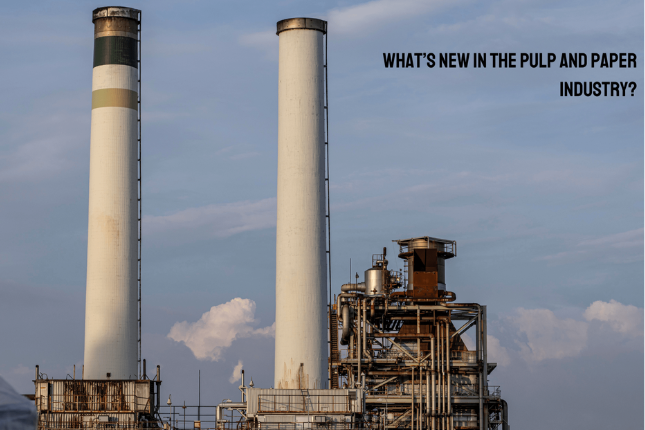
    What’s New in the Pulp and Paper Industry? A Quick Look at Today’s Trends

    Introduction

    The pulp and paper industry is changing fast. From new technologies to eco-friendly packaging, there’s a lot happening. In this quick read, we’ll highlight the most important updates and what they mean for businesses and manufacturers.

    If you’re looking for the latest paper industry news today, this blog gives you a clear picture of where things are headed.

    1. Eco-Friendly Packaging is on the Rise

    One of the biggest trends in pulp and paper industry news is the growing demand for sustainable packaging. As companies move away from plastic, paper packaging manufacturers are stepping up with biodegradable and recyclable options. This shift is not just about the environment—it’s also about meeting customer expectations.

    2. Smart Technology in Paper Mills

    New technologies like AI, automation, and data analytics are changing how paper is made. These tools help companies produce better-quality paper, save energy, and reduce waste. It’s a win-win for both business and the environment.

    3. Global Growth and Market Demand

    According to recent paper industry news, countries like India and Brazil are investing in new paper production plants. There’s a growing need for tissue paper, hygiene products, and eco-packaging, especially after the pandemic.

    4. Innovation by Paper Packaging Manufacturers

    Today’s paper packaging manufacturers aren’t just making boxes. They’re designing smart, lightweight, and durable packaging. Some are even adding water-resistant coatings and smart labels to meet specific industry needs.

    Conclusion

    The latest paper industry news today shows an industry that’s adapting and growing. With a focus on sustainability, smart tech, and global expansion, the pulp and paper sector is more innovative than ever.

    Stay tuned to our blog for more pulp and paper industry news and updates from the packaging world!

  • Evolving Trends in the Pulp and Paper Industry: Innovations, Packaging Shifts & Market Outlook

    Evolving Trends in the Pulp and Paper Industry: Innovations, Packaging Shifts & Market Outlook

    Introduction

    The global pulp and paper industry is undergoing a major transformation driven by sustainability, technological advancements, and changing consumer preferences. From increased demand for eco-friendly packaging to digital innovations in manufacturing, staying updated with the latest paper industry news has become more important than ever for businesses and stakeholders.

    In this blog, we’ll explore the key developments shaping the industry, innovations in packaging, and how paper packaging manufacturers are responding to global challenges.

    Innovation Driving Efficiency

    Technological innovation is redefining production processes. Modern paper mills are now integrating automation, AI, and IoT technologies to streamline operations and reduce waste. These advancements are improving pulp extraction methods, enhancing energy efficiency, and increasing yield without compromising product quality.

    For instance, digital twins and data analytics tools are helping manufacturers predict equipment failures, optimize maintenance, and improve product consistency—marking a significant leap forward in paper mill productivity.

    Global Market Trends and Expansion

    Recent paper industry news also highlights the expansion of paper production in emerging markets. Countries like India, Brazil, and Vietnam are investing heavily in new paper plants and recycled paper facilities to meet growing domestic and export demands.

    In addition, the demand for tissue paper, hygiene products, and corrugated packaging has surged post-pandemic, fueling growth in both the pulp and packaging segments of the industry.

    The Role of Paper Packaging Manufacturers

    Paper packaging manufacturers are at the heart of this evolution. With pressure from environmentally conscious consumers and corporate sustainability goals, manufacturers are not only developing greener products but also innovating in design.

    Lightweight packaging, smart labelling, water-resistant coatings, and minimalistic branding are trends gaining momentum. Many producers are investing in R&D to develop next-gen fiber-based materials that are both functional and planet-friendly.

    Industry Challenges and the Road Ahead

    Despite the progress, the industry faces challenges such as:

    • Rising raw material and energy costs
    • Supply chain disruptions
    • Pressure to meet ESG compliance standards

    To address these, collaboration across the supply chain, innovation in fiber sourcing, and continued investment in clean technology will be crucial.

    Conclusion

    The pulp and paper industry is rapidly evolving to meet the needs of a sustainable future. From high-tech innovations to environmentally responsible packaging, the latest paper industry news reflects a sector full of opportunity and resilience.

    For professionals, suppliers, and investors, staying informed through platforms that share paper industry news today is vital for staying competitive and proactive in a dynamic market.