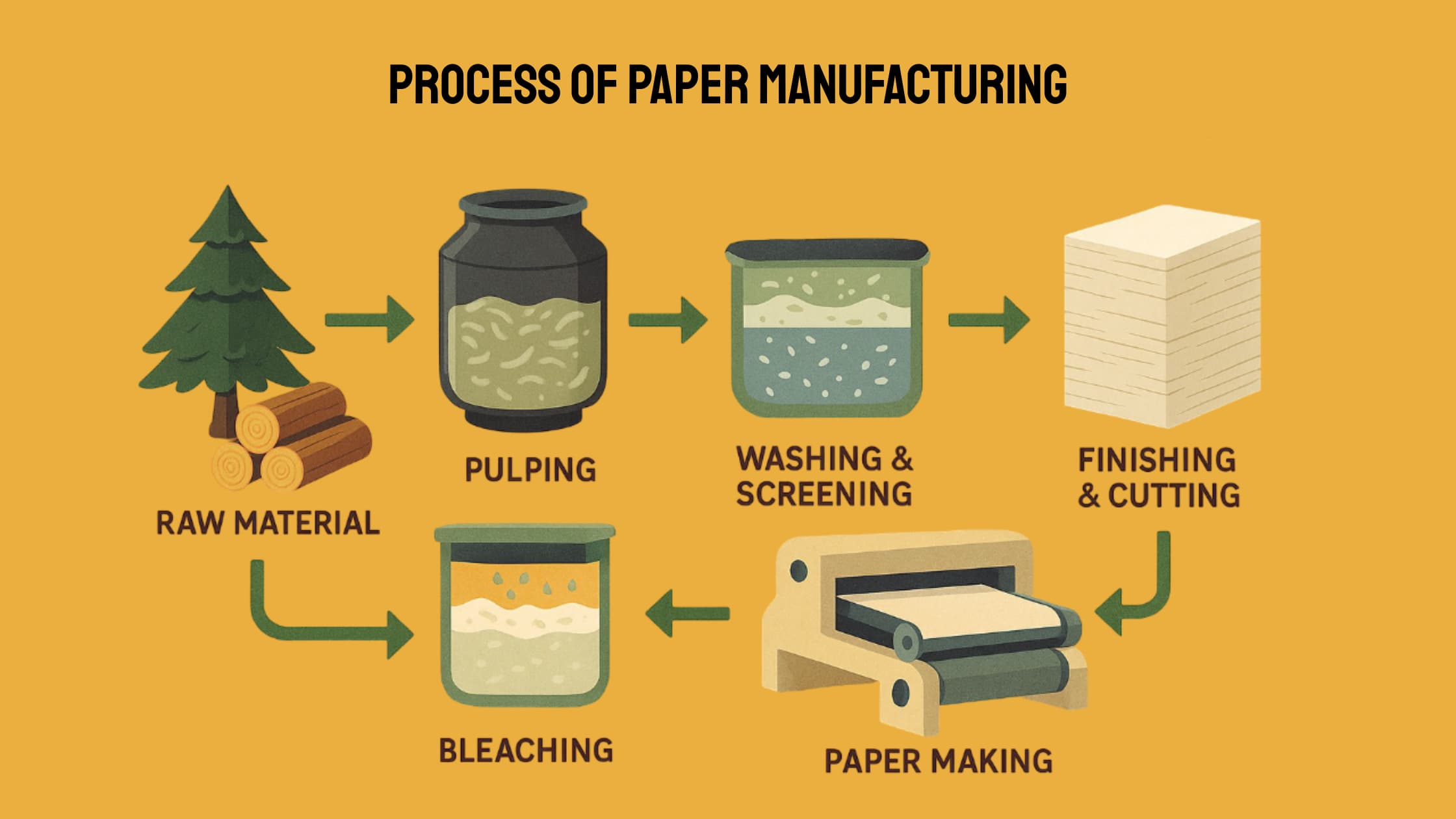
Paper is an essential part of our daily lives, used for writing, packaging, hygiene, and countless other applications. But have you ever wondered how paper is made? The process of paper manufacturing is a fascinating journey that transforms raw plant fibers into the clean white sheets we use every day. In this blog, we will explore the key steps in the paper making process, the role of pulp, and the technologies involved in pulp and paper manufacturing.
1. Raw Material Preparation
The first step in the process of paper manufacturing begins with collecting raw materials. Most commonly, wood is the primary source, although recycled paper and non-wood fibers like bamboo, hemp, or straw are also used.
The wood is chipped into small pieces using mechanical or chemical methods. These chips are the foundation for making pulp, which is the fibrous material used to create paper.
2. Pulping: Breaking Down the Fibers
Pulping is the process of breaking down wood chips into cellulose fibers. There are two main types of pulping:
- Mechanical Pulping: Wood chips are ground into pulp using machines. This method is cost-effective and retains most of the wood components but produces weaker paper.
- Chemical Pulping: Wood chips are cooked in chemicals like sodium hydroxide to remove lignin (a glue-like substance), leaving behind stronger and cleaner fibers. The Kraft process is a popular example.
This step is critical in the paper manufacturing process, as the quality of pulp determines the strength and texture of the final product.
3. Pulp Washing and Screening
After pulping, the slurry contains unwanted substances like lignin and debris. It goes through a washing and screening stage to remove impurities. Clean, uniform pulp ensures smoother paper surfaces and better performance for printing or packaging.
4. Bleaching (Optional)
If white paper is the goal, the pulp is bleached to remove color and brighten it. Environmentally friendly methods use oxygen, hydrogen peroxide, or ozone instead of chlorine. This step is especially important in the pulp and paper manufacturing process for high-quality printing and writing paper.
5. Paper Making: Forming the Sheet
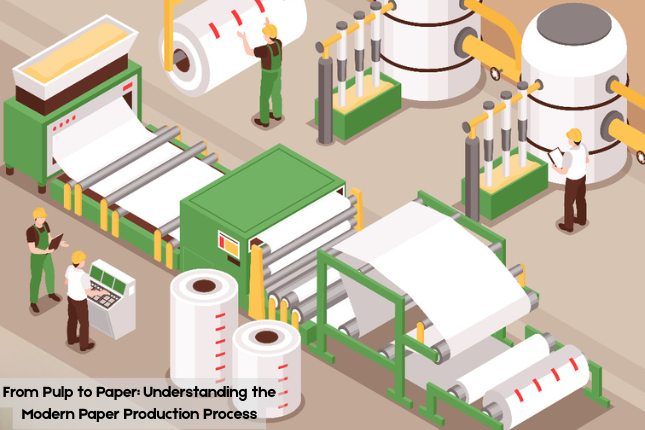
Now comes the exciting part — paper making. The cleaned pulp is diluted with water and spread onto a moving screen called a Fourdrinier machine.
Here, water drains out, and fibers start to bond together. The sheet then goes through the following stages:
- Pressing: Removes excess water using heavy rollers.
- Drying: The wet sheet passes through steam-heated rollers to remove moisture.
- Calendaring: Smoothens and flattens the paper for a consistent finish.
The paper making process transforms pulp into a continuous sheet that can be cut and rolled as needed.
6. Finishing and Cutting
Depending on its intended use, the paper may undergo further processing like coating (for glossy paper), embossing, or coloring. Finally, the paper is trimmed, rolled, or cut into sheets before packaging and shipping.
7. Recycling and Sustainability
Modern paper manufacturing is increasingly focused on sustainability. Recycled paper is used in many applications, reducing the need for virgin wood. Efficient water use, eco-friendly chemicals, and renewable energy sources are now part of the evolving pulp and paper manufacturing process.
Conclusion
The process of paper manufacturing involves a series of intricate steps that convert wood fibers into the paper we use every day. From raw material preparation and pulping to sheet formation and finishing, each stage plays a crucial role. With sustainability becoming a key concern, the paper making process is now greener, more efficient, and more innovative than ever before.
Whether you’re a student, industry professional, or just curious, understanding how paper is made gives you a deeper appreciation for this everyday product.