Tag: paper industry

  • Process of Paper Manufacturing: From Pulp to Paper

    Process of Paper Manufacturing: From Pulp to Paper

    Paper is an essential part of our daily lives, used for writing, packaging, hygiene, and countless other applications. But have you ever wondered how paper is made? The process of paper manufacturing is a fascinating journey that transforms raw plant fibers into the clean white sheets we use every day. In this blog, we will explore the key steps in the paper making process, the role of pulp, and the technologies involved in pulp and paper manufacturing.

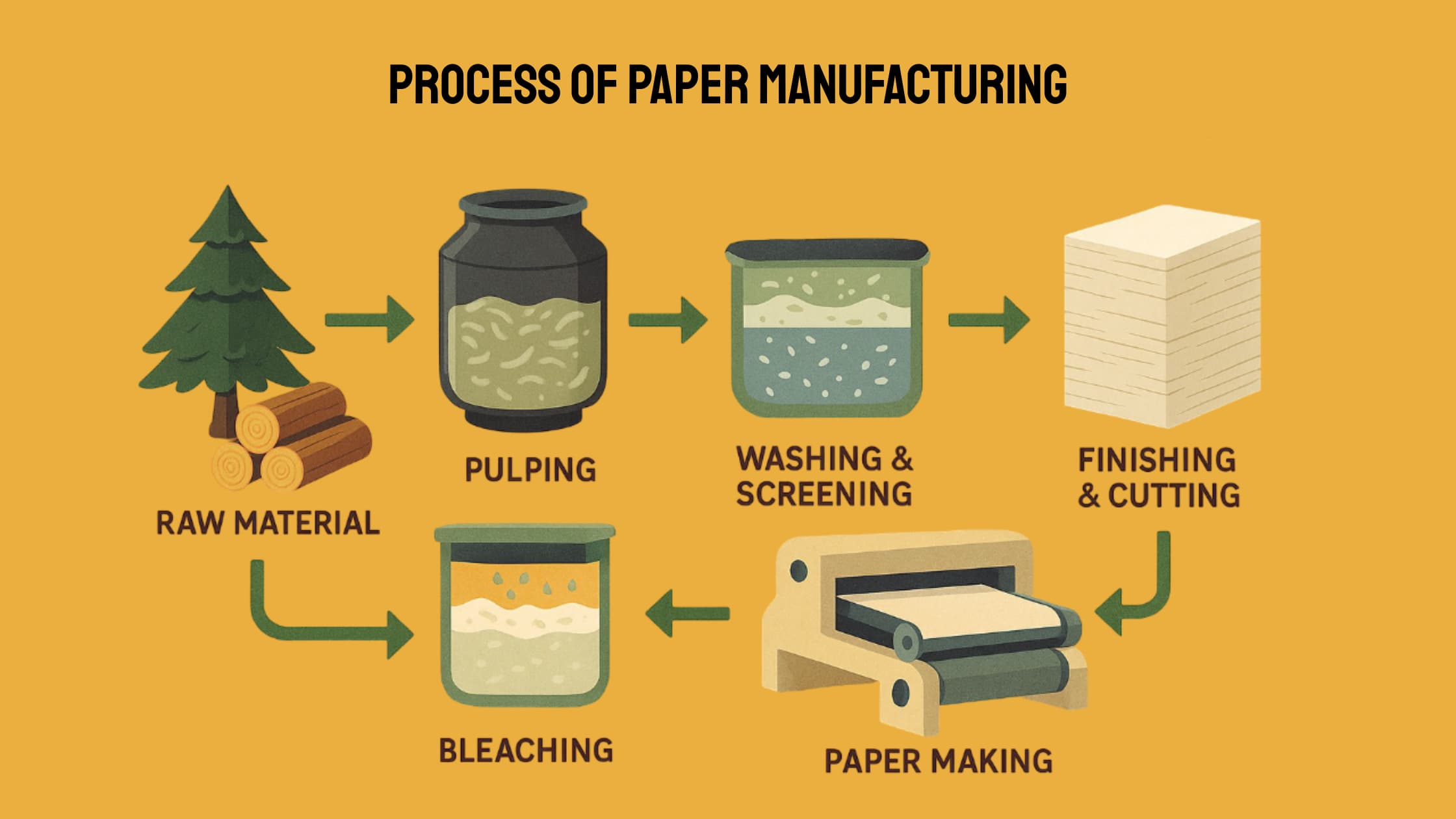
    1. Raw Material Preparation

    The first step in the process of paper manufacturing begins with collecting raw materials. Most commonly, wood is the primary source, although recycled paper and non-wood fibers like bamboo, hemp, or straw are also used.

    The wood is chipped into small pieces using mechanical or chemical methods. These chips are the foundation for making pulp, which is the fibrous material used to create paper.

    2. Pulping: Breaking Down the Fibers

    Pulping is the process of breaking down wood chips into cellulose fibers. There are two main types of pulping:

    • Mechanical Pulping: Wood chips are ground into pulp using machines. This method is cost-effective and retains most of the wood components but produces weaker paper.
    • Chemical Pulping: Wood chips are cooked in chemicals like sodium hydroxide to remove lignin (a glue-like substance), leaving behind stronger and cleaner fibers. The Kraft process is a popular example.

    This step is critical in the paper manufacturing process, as the quality of pulp determines the strength and texture of the final product.

    3. Pulp Washing and Screening

    After pulping, the slurry contains unwanted substances like lignin and debris. It goes through a washing and screening stage to remove impurities. Clean, uniform pulp ensures smoother paper surfaces and better performance for printing or packaging.

    4. Bleaching (Optional)

    If white paper is the goal, the pulp is bleached to remove color and brighten it. Environmentally friendly methods use oxygen, hydrogen peroxide, or ozone instead of chlorine. This step is especially important in the pulp and paper manufacturing process for high-quality printing and writing paper.

    5. Paper Making: Forming the Sheet

    Now comes the exciting part — paper making. The cleaned pulp is diluted with water and spread onto a moving screen called a Fourdrinier machine.

    Here, water drains out, and fibers start to bond together. The sheet then goes through the following stages:

    • Pressing: Removes excess water using heavy rollers.
    • Drying: The wet sheet passes through steam-heated rollers to remove moisture.
    • Calendaring: Smoothens and flattens the paper for a consistent finish.

    The paper making process transforms pulp into a continuous sheet that can be cut and rolled as needed.

    6. Finishing and Cutting

    Depending on its intended use, the paper may undergo further processing like coating (for glossy paper), embossing, or coloring. Finally, the paper is trimmed, rolled, or cut into sheets before packaging and shipping.

    7. Recycling and Sustainability

    Modern paper manufacturing is increasingly focused on sustainability. Recycled paper is used in many applications, reducing the need for virgin wood. Efficient water use, eco-friendly chemicals, and renewable energy sources are now part of the evolving pulp and paper manufacturing process.

    Conclusion

    The process of paper manufacturing involves a series of intricate steps that convert wood fibers into the paper we use every day. From raw material preparation and pulping to sheet formation and finishing, each stage plays a crucial role. With sustainability becoming a key concern, the paper making process is now greener, more efficient, and more innovative than ever before.

    Whether you’re a student, industry professional, or just curious, understanding how paper is made gives you a deeper appreciation for this everyday product.
  • What Are the Top Pulp and Paper Trends in 2025?

    What Are the Top Pulp and Paper Trends in 2025?

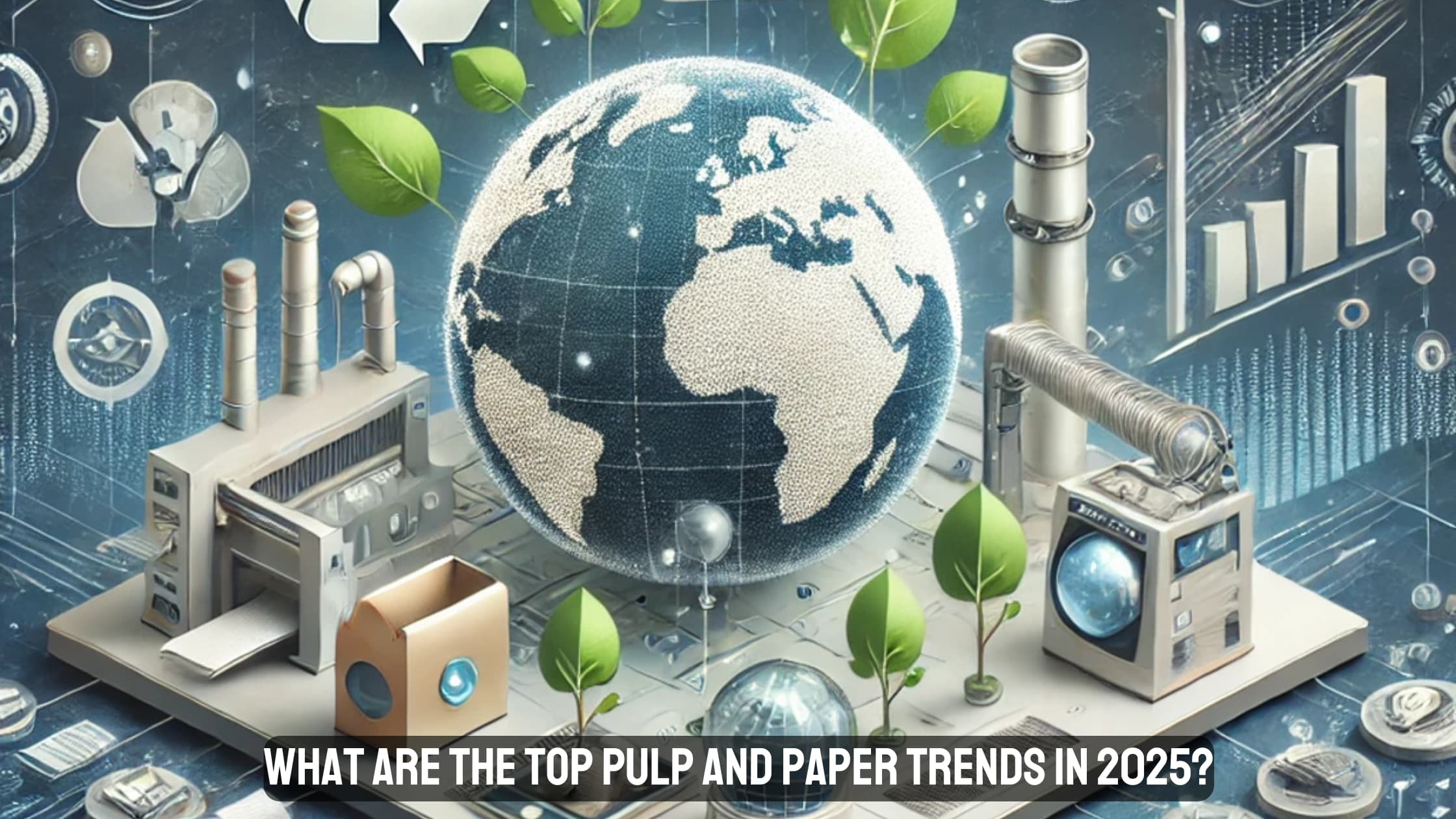
    The pulp and paper industry is entering a transformative phase. Driven by innovation, sustainability, and increasing global demand, pulp and paper trends in 2025 reflect a new wave of growth and evolution. From eco-friendly practices to automation, the paper industry is adapting to meet changing consumer expectations and regulatory requirements. Let’s explore the top trends that are shaping the paper industry market size, operations, and future outlook.

    Surge in Sustainable Paper Production | Pulp and Paper Trends

    Sustainability continues to lead the way in 2025. With governments and organizations enforcing stricter environmental regulations, paper mills are investing in eco-friendly solutions. Key developments include:

    • Use of recycled fibers and alternative raw materials (like agro-waste and bamboo)
    • Reduction in water and energy usage through green technologies
    • Carbon footprint reduction by adopting renewable energy sources

    Sustainable packaging and biodegradable paper products are gaining popularity, especially in FMCG and e-commerce sectors, influencing the pulp and paper market significantly.

    Digital Transformation and Smart Paper Mills | Pulp and Paper Trends

    Industry 4.0 is no longer optional. Smart factories are becoming the norm in the pulp and paper industry, with the integration of:

    • AI and Machine Learning to optimize production efficiency
    • IoT-enabled sensors for real-time monitoring of machinery and process data
    • Predictive maintenance to reduce downtime

    Automation in paper production not only increases output but also enhances quality control and reduces labor costs.

    Increase in Global Paper Consumption | Pulp and Paper Trends

    Contrary to the belief that digitalization reduces paper usage, paper demand remains strong in many regions. The paper industry market size is expected to grow in 2025 due to:

    • The rise of e-commerce, increasing the need for paper-based packaging
    • Growth in hygiene paper (tissue, napkins, etc.) due to health awareness
    • Educational sectors in developing nations still relying heavily on printed material

    This growth fuels investments in new paper mills and machinery globally.

    Rise of Molded Fiber and Paper Packaging Solutions | Pulp and Paper Trends

    In response to the plastic ban in many countries, molded fiber and paper-based packaging are gaining traction. Lightweight, durable, and compostable, these solutions are reshaping the packaging landscape. Innovations in pulp molding and fiber strength are making them suitable even for food-grade and industrial applications.

    Expansion in Asia-Pacific and African Markets | Pulp and Paper Trends

    Emerging economies, especially in Asia-Pacific and Africa, are becoming major contributors to the pulp and paper market. Factors driving this expansion include:

    • Urbanization and rising disposable incomes
    • Industrial development needing paper-based materials
    • Increased literacy rates and educational reforms

    Manufacturers are setting up new paper mills in these regions to meet demand locally and reduce export dependency.

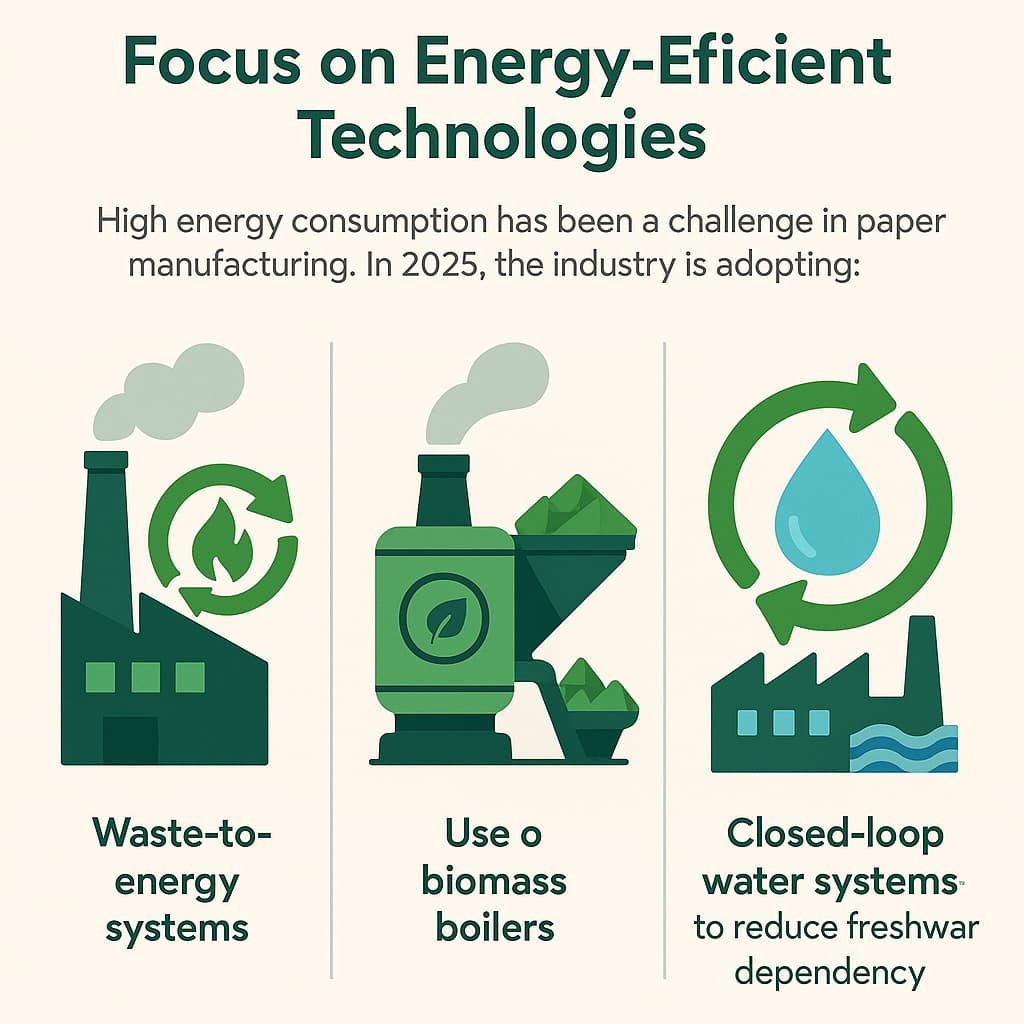
    Focus on Energy-Efficient Technologies | Pulp and Paper Trends

    High energy consumption has been a challenge in paper manufacturing. In 2025, the industry is adopting:

    • Waste-to-energy systems
    • Use of biomass boilers
    • Closed-loop water systems to reduce freshwater dependency

    These innovations improve sustainability and cost-efficiency, making production more viable in the long term.

    Circular Economy and Waste Management | Pulp and Paper Trends

    The concept of a circular economy is gaining ground. Major players in the pulp and paper industry are building closed-loop systems where paper waste is recycled back into the supply chain. This reduces landfill waste and improves raw material usage. Moreover, governments are incentivizing recycling practices through policy support and infrastructure development.

    Customization and Premium Paper Products | Pulp and Paper Trends

    Consumers are increasingly looking for customized and premium paper products. Specialty papers, textured designs, and eco-friendly labels are in demand, especially in the luxury packaging and stationery segments. This trend is pushing manufacturers to diversify their product range and invest in flexible production systems.

    Global Trade and Market Consolidation | Pulp and Paper Trends

    The paper industry is seeing increased consolidation through mergers and acquisitions. Global players are acquiring regional brands to expand their footprint and benefit from economies of scale. Additionally, fluctuations in raw material prices and global trade policies are influencing import/export dynamics, pushing companies to localize their supply chains.

    Greater Emphasis on Compliance and Certifications | Pulp and Paper Trends

    In 2025, compliance with global environmental standards is crucial. Certifications like FSC (Forest Stewardship Council), PEFC (Programme for the Endorsement of Forest Certification), and ISO 14001 are becoming must-haves for manufacturers aiming to maintain credibility and access to international markets.

    Conclusion

    The pulp and paper trends in 2025 showcase an industry that’s balancing growth with sustainability, tradition with innovation. Whether it’s the rising paper industry market size, smarter paper mills, or the shift to eco-conscious production, the sector is poised for a resilient future.

    Companies that embrace these trends—especially digital transformation, sustainability, and regional expansion—will not only survive but thrive in the evolving pulp and paper market.

  • Pulp and Paper Manufacturing Automation: The Future of Smarter Mills

    Pulp and Paper Manufacturing Automation: The Future of Smarter Mills

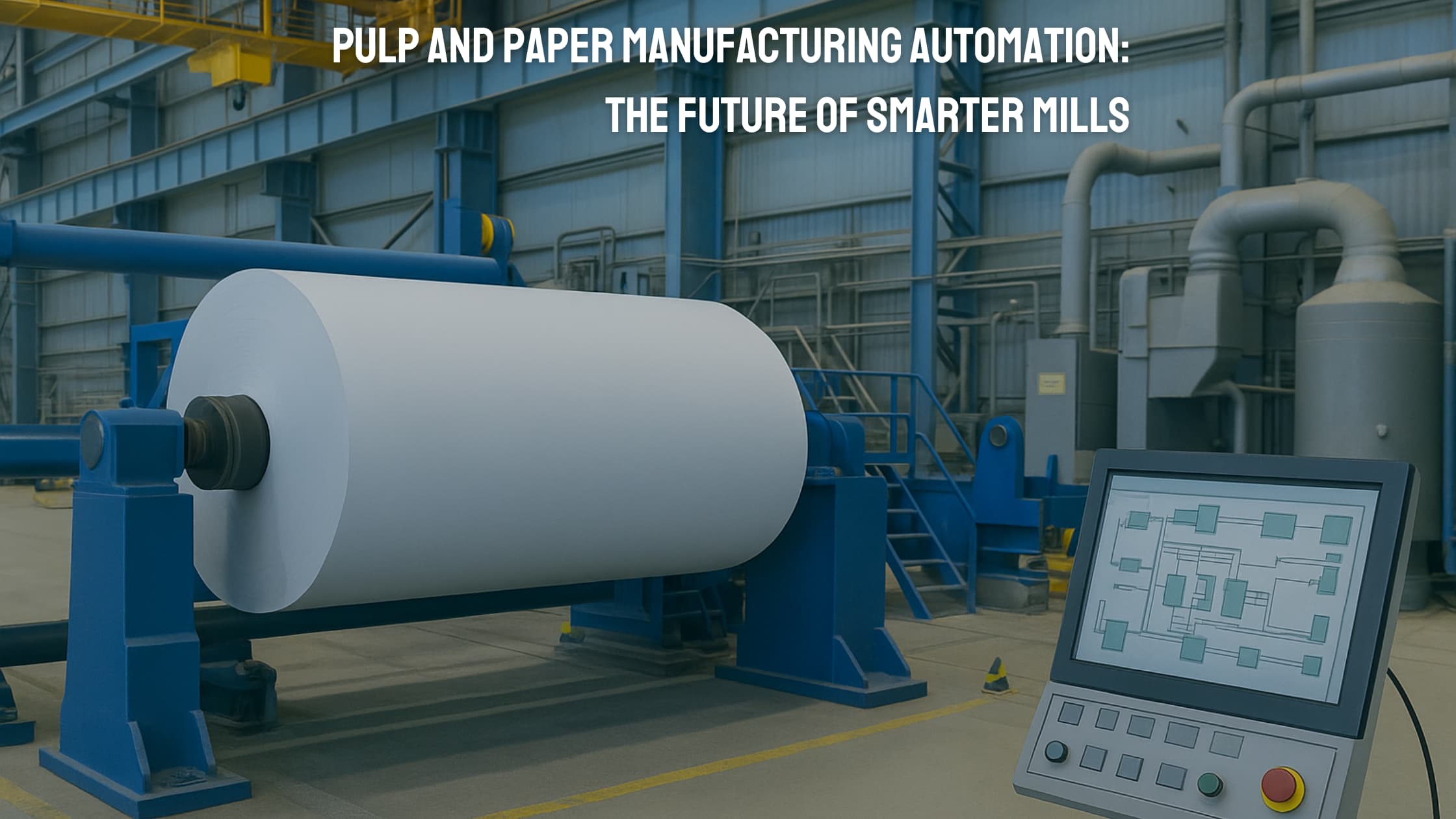
    The pulp and paper manufacturing automation wave is reshaping the global paper industry by introducing intelligent, interconnected systems that optimize operations, reduce waste, and boost sustainability. From raw material processing to final sheet production, automation is now at the heart of innovation in the pulp and paper industry, creating opportunities for mills to modernize and remain competitive in an evolving industrial landscape.

    The Need for Automation in the Paper Manufacturing Industry

    Traditionally, the paper manufacturing industry has been resource-intensive, requiring large volumes of water, energy, and raw materials. Manual operations in legacy mills often led to inefficiencies, inconsistent quality, and high operating costs. With growing global demand for packaging, hygiene products, and sustainable materials, the pressure is on to optimize every stage of the process.

    Here’s where automation in the manufacturing industry comes in—integrating smart controls, sensors, and real-time data monitoring to create streamlined and sustainable production environments.

    What Is Pulp and Paper Manufacturing Automation?

    Pulp and paper manufacturing automation refers to the use of digital technologies such as Programmable Logic Controllers (PLCs), Distributed Control Systems (DCS), SCADA, AI, and IoT to monitor and control the production process in real-time. This enables paper mills to achieve higher levels of productivity, consistency, and resource efficiency.

    Automation can be applied at multiple stages:

    • Pulping Process: Regulates chemical dosage, fiber consistency, and digester temperature.
    • Paper Machine Control: Automates headbox settings, drying parameters, and web tension for optimal sheet formation.
    • Finishing & Packaging: Enables robotic handling, wrapping, and inventory tracking.
    • Energy and Water Management: Real-time data helps reduce energy consumption and reuse water efficiently.

    Key Technologies Driving Mill Automation

    Modern mill automation is powered by a range of interconnected technologies:

    1. SCADA (Supervisory Control and Data Acquisition) Systems

    These systems provide a real-time overview of plant operations, allowing operators to respond quickly to process deviations and system faults.

    2. IoT Sensors & Edge Devices

    Internet of Things (IoT) devices collect and transmit data on temperature, pressure, flow rate, and vibration to anticipate maintenance needs and prevent equipment failure.

    3. Artificial Intelligence (AI) and Machine Learning

    AI algorithms analyze historical and real-time data to forecast demand, optimize machine settings, and improve quality control.

    4. Digital Twins

    A digital replica of mill operations enables simulation, testing, and optimization of production without halting the actual system.

    Benefits of Automation in the Pulp and Paper Industry

    Embracing automation in the pulp and paper industry provides multiple operational and strategic advantages:

    1. Higher Efficiency

    Automation reduces downtime, speeds up production, and ensures consistent quality with fewer errors.

    2. Cost Reduction

    Optimized energy use, reduced wastage, and minimized manual labor lower the total cost of operations.

    3. Improved Safety

    Remote monitoring and control reduce the need for manual intervention in high-risk areas of the mill.

    4. Sustainability

    Automated systems help monitor and manage water and energy usage, contributing to more eco-friendly operations.

    5. Scalability

    Automation allows mills to scale production quickly without proportionally increasing labor or resource usage.

    Real-Life Use Case: Smart Paper Mills in Action

    Several leading paper manufacturers have already adopted paper manufacturing industry automation systems to gain competitive advantages:

    • ABB and Siemens have installed DCS and automation solutions across mills in Asia and Europe, significantly reducing downtime and enhancing operational visibility.
    • In India, companies like Parason are introducing automated pulp processing equipment that ensures fiber uniformity and energy-efficient refining.

    Challenges in Adopting Automation

    While the benefits are clear, implementing automation in the manufacturing industry also presents a few challenges:

    1. High Initial Investment

    Automation systems and integration often require substantial capital expenditure, especially for older mills.

    2. Workforce Transition

    Upskilling existing workers to manage and operate automated systems is critical, requiring training and change management.

    3. Data Security

    As mills become more connected, protecting operational data from cyber threats becomes a priority.

    The Road Ahead: Smart, Sustainable Mills

    The future of the pulp and paper industry lies in smart manufacturing. As regulations tighten and consumer demand for sustainable products increases, pulp and paper manufacturing automation will be essential for survival and growth.

    Upcoming trends include:

    • Predictive Maintenance using AI
    • Autonomous Material Handling via robotics
    • Blockchain for supply chain traceability
    • Remote Operations and virtual control rooms

    Conclusion

    The journey to a smarter, more sustainable paper manufacturing industry begins with embracing pulp and paper manufacturing automation. As mills digitize operations, they gain better control over production, minimize environmental impact, and respond faster to market needs.

    At Parason, we are committed to advancing automation in the pulp and paper industry with our innovative machinery and technology-driven solutions. As your partner in mill modernization, we help you stay ahead in an increasingly digital and eco-conscious world.