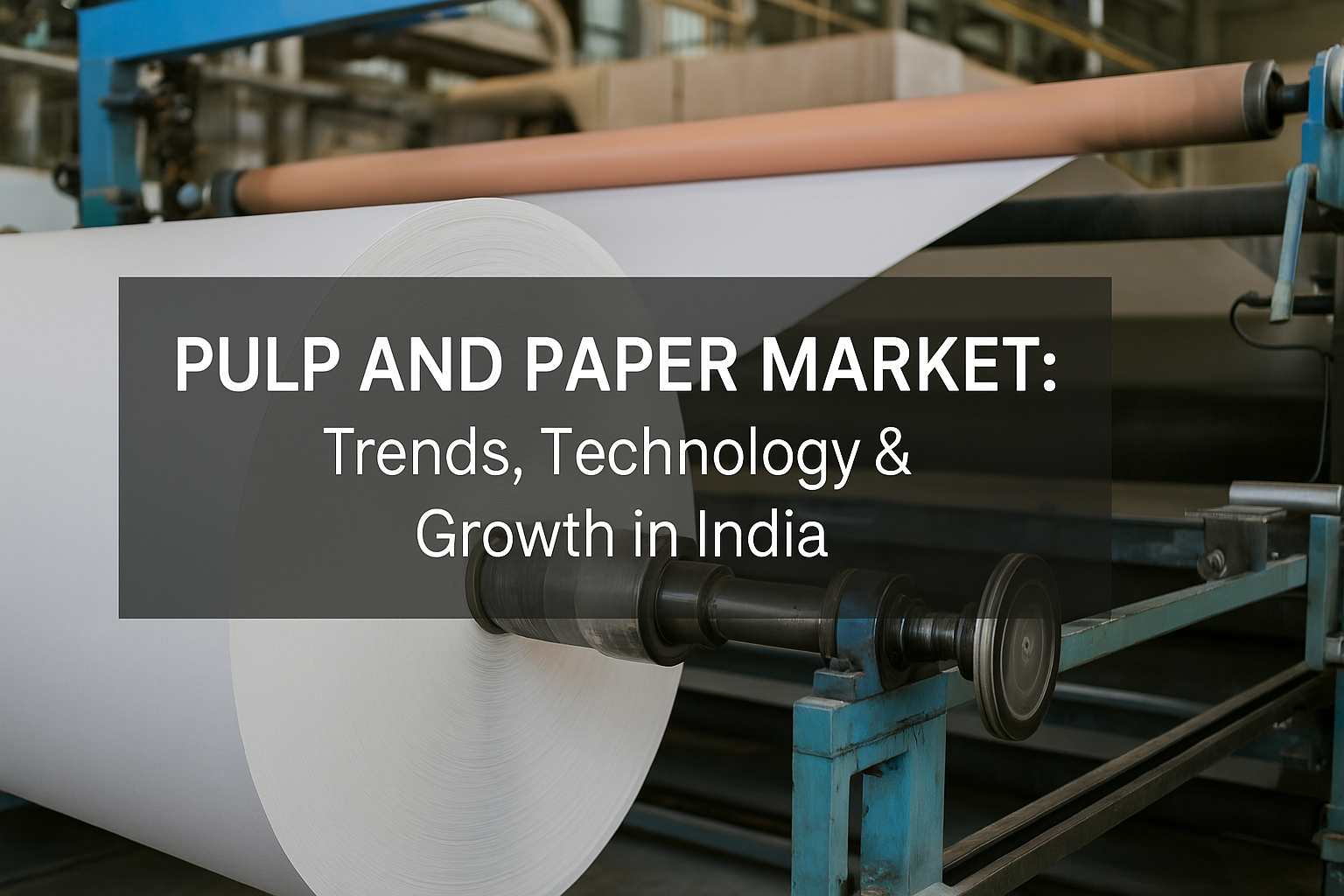
The pulp and paper market is undergoing a transformative shift driven by sustainability goals, technological innovation, and the rising demand for eco-friendly packaging. In India, the industry is experiencing steady growth as it adapts to changing consumer behavior, environmental regulations, and global trends. With increasing focus on recycled materials and biodegradable packaging, paper market trends clearly indicate that the pulp and paper market is set to play a pivotal role in shaping the future of sustainable manufacturing and packaging solutions.
Paper Market Trends in India: Growing Demand & Sustainability
India is one of the fastest-growing pulp and paper markets globally, driven by factors such as rising literacy rates, rapid urbanization, and increasing demand for paper-based packaging. As e-commerce expands and consumers lean toward plastic-free alternatives, paper pulp packaging has become a preferred choice for both manufacturers and environmentally conscious consumers.
The pulp and paper market size in India is projected to grow significantly over the next decade, driven by key sectors including packaging, printing, tissue paper, and industrial paper applications. According to industry estimates, the Indian pulp and paper market is expected to exceed USD 13 billion by 2030, with the packaging paper and board segments leading this expansion.
Initiatives such as bans on single-use plastics and the promotion of sustainable alternatives by the Indian government have been instrumental in boosting paper demand. These shifts reflect global paper market trends emphasizing sustainability and environmental responsibility.
New Technology in the Pulp and Paper Industry
The adoption of new technologies in the pulp and paper industry is enhancing operational efficiency, reducing environmental impact, and improving the quality of paper products. Automation, AI-driven process monitoring, and the use of energy-efficient machinery are increasingly being implemented in modern paper mills.
One key innovation is enzymatic pulping, where enzymes replace harsh chemicals in fiber processing. This method not only improves pulp quality but also significantly reduces pollution and water usage. Other advancements include closed-loop water recycling systems, advanced bleaching technologies, and the use of IoT sensors for real-time quality control.
These technological developments reflect broader paper market trends that prioritize clean production and compliance with global environmental standards.
Rise of Pulp Packaging Manufacturers in India
With sustainability at the forefront, pulp packaging manufacturers in India are witnessing strong growth. These companies specialize in molded fiber packaging made from recycled paper or agricultural waste, offering biodegradable alternatives to plastic. Products like trays, boxes, clamshells, and containers made from paper pulp are increasingly popular in food delivery, electronics, and retail sectors.
Innovative paper pulp packaging manufacturers are also investing in R&D to enhance the strength, design, and moisture resistance of their products. Many are exploring the use of agro-residues such as sugarcane bagasse, wheat straw, and even coconut husks to develop sustainable, compostable packaging solutions.
Challenges and Opportunities in the Paper Market Trends
Despite the positive momentum, the pulp and paper industry in India faces several challenges, including the scarcity of raw materials, outdated equipment in small-scale mills, and rising energy costs. However, government policies encouraging sustainability—such as tax incentives, infrastructure support, and subsidies for green manufacturing—are helping mitigate these issues.
The move toward a circular economy presents immense opportunities. Businesses are now focusing on recycling, upcycling, and responsible waste management to reduce their carbon footprint. By aligning with global paper market trends, Indian manufacturers can access international markets and position themselves as leaders in eco-conscious paper production.
Conclusion
The pulp and paper market in India is evolving rapidly, led by innovation, sustainability, and a shift in consumer and industry preferences. As paper market trends continue to emphasize greener, smarter production methods, manufacturers—particularly those involved in pulp-based and molded fiber packaging—are in a strong position to thrive.
With continuous improvements in technology, a growing eco-conscious consumer base, and proactive government support, the Indian pulp and paper industry is poised to become a global leader in sustainable packaging and paper products.
Leave a Reply