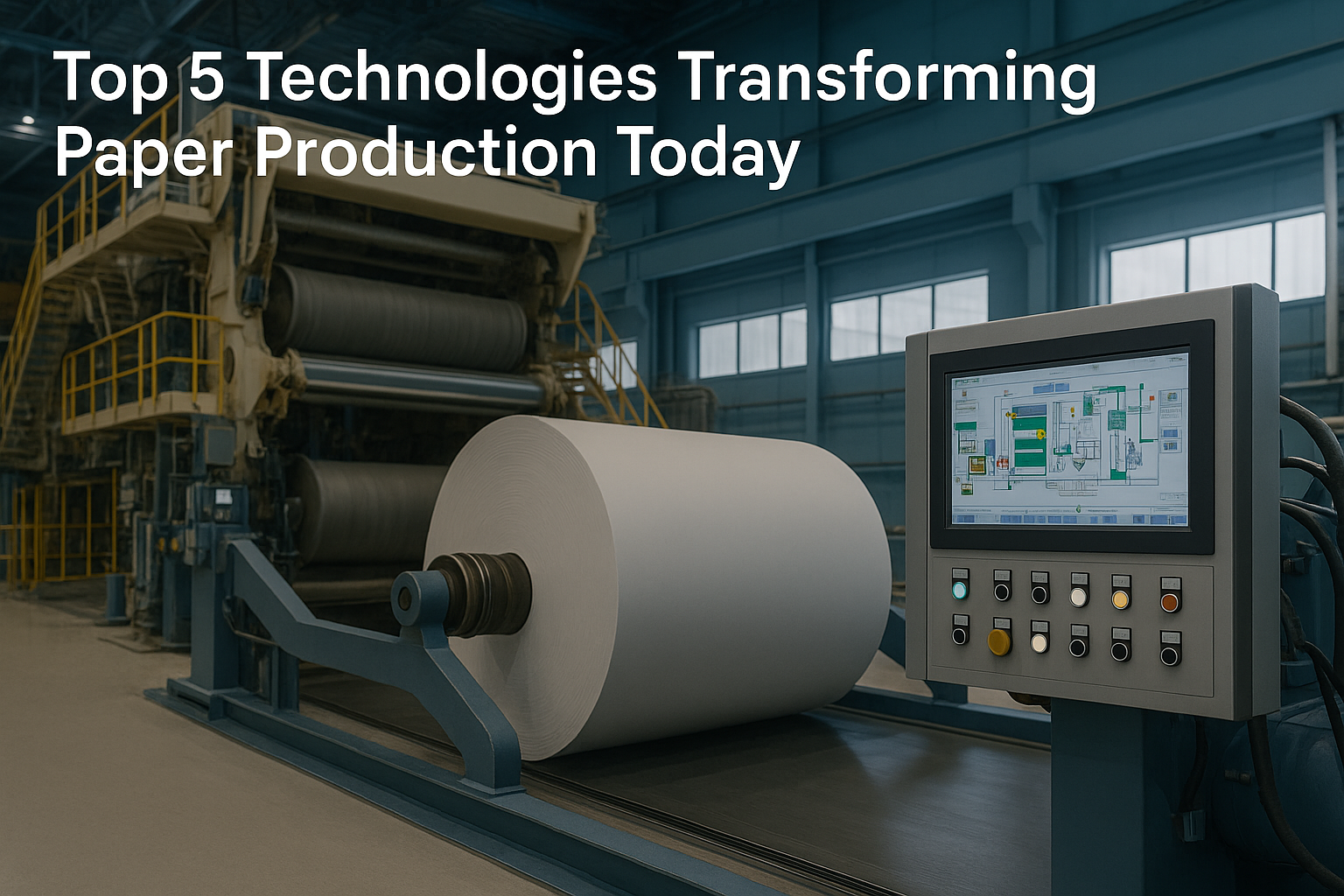
The paper industry is undergoing a major transformation, driven by innovations in paper production technology. As global demand for sustainable, high-quality paper increases, manufacturers are adopting smarter, faster, and more efficient methods. From automation in the paper industry to AI-powered analytics, the integration of modern technologies is reshaping how paper is produced, processed, and delivered.
In this blog, we explore the top five technologies revolutionizing paper production, highlighting their benefits and the role they play in optimizing efficiency and sustainability in the sector.
1. Automation in Paper Industry
One of the most significant advances in recent years is automation in the paper industry. Automation has streamlined many manual operations within paper mills, reducing human error and increasing productivity. With the implementation of programmable logic controllers (PLCs), robotics, and distributed control systems (DCS), manufacturers can now monitor and manage every stage of the paper production process—from pulping to finishing—with unmatched precision.
Benefits:
- Faster production cycles
- Real-time monitoring and reporting
- Consistent product quality
- Reduced labor costs
- Enhanced safety through remote control systems
By reducing reliance on manual processes, automation allows companies to meet growing demand while ensuring product consistency and minimizing downtime.
2. Paper Mill Automation and Smart Monitoring Systems
Paper mill automation goes beyond just machines—it includes smart systems that integrate sensors, machine learning algorithms, and data analytics to manage plant operations intelligently. Smart mills can detect issues like machine wear, pulp inconsistencies, or energy inefficiencies before they impact production.
For instance, IoT-enabled sensors track machine performance and send data to cloud-based platforms where it’s analyzed in real time. Maintenance teams receive alerts for predictive maintenance, preventing costly unplanned downtimes.
Features of Smart Paper Mill Systems:
- Predictive maintenance using AI and machine learning
- Energy usage optimization
- Automated quality control using image processing
- Cloud-based data analytics dashboards
With paper mill automation, mills can optimize operations and improve profitability while moving toward more sustainable practices.
3. Advanced Pulp and Paper Technology
Pulp and paper technology has evolved significantly with innovations in fiber processing and chemical treatments. These improvements help manufacturers enhance the strength, texture, and environmental performance of their products.
New pulping methods, such as enzymatic and bio-mechanical pulping, offer environmentally friendly alternatives to traditional chemical pulping. These techniques reduce energy use and chemical waste, while maintaining fiber strength and paper quality.
Innovations Include:
- Enzymatic pulping for reduced chemical usage
- Improved deinking processes for recycled paper
- Closed-loop water systems to reduce wastewater
- Advanced fiber refining technologies for better surface finish
Embracing new pulp and paper technologies not only ensures better product quality but also helps in achieving sustainability goals.
4. Artificial Intelligence and Machine Learning in Paper Production
AI is playing a transformative role in optimizing paper production technology. Machine learning algorithms can process large volumes of production data to identify patterns, inefficiencies, and areas for improvement.
For example, AI can analyze drying patterns or moisture levels and recommend adjustments in real-time to maintain uniform quality. It can also forecast raw material needs and optimize scheduling to avoid bottlenecks in production.
Applications of AI in Paper Production:
- Real-time defect detection
- Production planning and forecasting
- Automated quality control systems
- Raw material optimization
This level of intelligence ensures better control over processes, lower waste generation, and higher yields.
5. Sustainable Paper Manufacturing Solutions
Sustainability is at the heart of innovation in the paper industry. Modern paper production technology is increasingly focused on reducing environmental impact. Technologies that minimize water consumption, reduce emissions, and enable the use of alternative raw materials are now being widely adopted.
From biomass energy solutions to eco-friendly chemicals, green innovations are helping paper mills become more responsible stewards of the environment.
Key Sustainability Technologies:
- Zero-liquid discharge (ZLD) wastewater systems
- Renewable energy integration (solar, biomass)
- Recyclable and biodegradable paper formulations
- Low-impact bleaching and chemical usage
As regulations tighten and consumer expectations rise, adopting sustainable production technologies is not just a choice—it’s a necessity.
Conclusion
The evolution of paper production technology is driving unprecedented efficiency, quality, and sustainability in the pulp and paper industry. With innovations like automation in paper industry, smart paper mill automation, and advanced pulp and paper technology, manufacturers can now meet global demand while reducing their environmental footprint.
Embracing these technologies not only gives businesses a competitive edge but also supports a more responsible and resilient paper industry. As the market continues to evolve, staying ahead means investing in the tools that transform operations from traditional to future-ready.