Paper is one of the most essential materials in our daily lives. Paper surrounds us in countless forms, from books and newspapers to packaging and hygiene products. While it may appear simple, the paper production process — the journey from raw material to the final paper product — is a fascinating blend of traditional methods and cutting-edge technology. In today’s world, where sustainability and innovation are more important than ever, understanding the paper production process sheds light on the industry’s evolving landscape.
The production of paper begins with the sourcing of raw materials. Traditionally, wood has been the primary source, with both hardwood and softwood used depending on the type of paper being manufactured. Hardwood typically yields shorter fibers, which contribute to smoother paper, while softwood provides longer fibers that enhance strength. However, the industry is steadily shifting towards more sustainable sources such as recycled paper, agricultural residues, and fast-growing plants like bamboo. Responsible sourcing, supported by certifications like FSC (Forest Stewardship Council) and PEFC (Programme for the Endorsement of Forest Certification), plays a key role in ensuring that forests are managed sustainably and environmental damage is minimized.
Once the raw materials are collected, they undergo a pulping process to separate the cellulose fibers needed to create paper. There are two primary types of pulping methods: mechanical and chemical. Mechanical pulping involves physically grinding the wood to release fibers, which is energy-efficient but produces weaker paper. On the other hand, chemical pulping, such as the kraft or sulfite process, uses chemicals to dissolve lignin—the substance that binds fibers together—resulting in stronger, more durable paper. Increasingly, mills are also incorporating recycled pulps, where recovered paper is de-inked, cleaned, and repulped, making it an eco-friendly alternative.
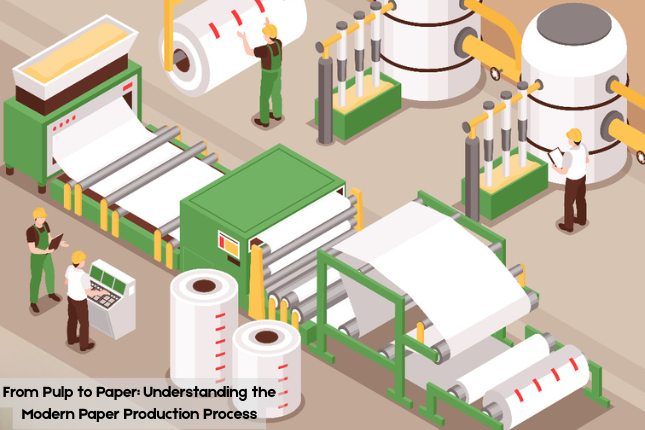
Following pulping, the fiber-rich slurry is further processed to refine and purify it. This refined pulp is then sent to the paper machine, which is where the transformation truly begins. The pulp is spread onto a moving wire mesh that allows water to drain out, forming a continuous sheet. This wet sheet then passes through a series of press rollers to remove additional moisture, followed by drying cylinders heated by steam to completely dry the paper. To achieve the desired finish, the paper is passed through calendaring rolls that smooth and compress it to the right thickness and surface texture.
Different kinds of paper are produced depending on the treatment and additives used during manufacturing. For example, glossy magazine paper may go through additional coating stages, while kraft paper used in packaging is left unbleached for added strength. Tissue paper requires high softness and absorbency, achieved by using specific pulping and drying methods. With the rise of e-commerce, the demand for paperboard and corrugated packaging materials has also surged, prompting innovations in both product design and production efficiency.
In recent years, the paper production process has seen remarkable technological advancements. Automation and smart monitoring systems now optimize every stage of production, from pulp refining to sheet forming. Sensors and artificial intelligence help maintain quality and reduce energy consumption, while predictive maintenance tools keep machines running efficiently. These innovations not only improve productivity but also reduce waste and environmental impact.
Speaking of sustainability, modern paper mills are increasingly focused on reducing their ecological footprint. Effluent treatment plants (ETPs) are used to treat wastewater before it is released or reused, helping protect local water bodies. Many mills also invest in renewable energy sources like biomass and solar power to meet their energy needs. Additionally, recycling initiatives and circular economy practices are helping extend the life cycle of paper and reduce dependence on virgin materials.
In conclusion, the paper production process is a dynamic interplay of nature, science, and innovation. From responsibly sourced raw materials to high-tech machines and sustainable practices, the journey from pulp to paper is far more complex—and fascinating—than it may seem at first glance. As the industry continues to adapt to environmental challenges and shifting market demands, it is clear that the future of paper manufacturing lies in cleaner, smarter, and more responsible solutions.