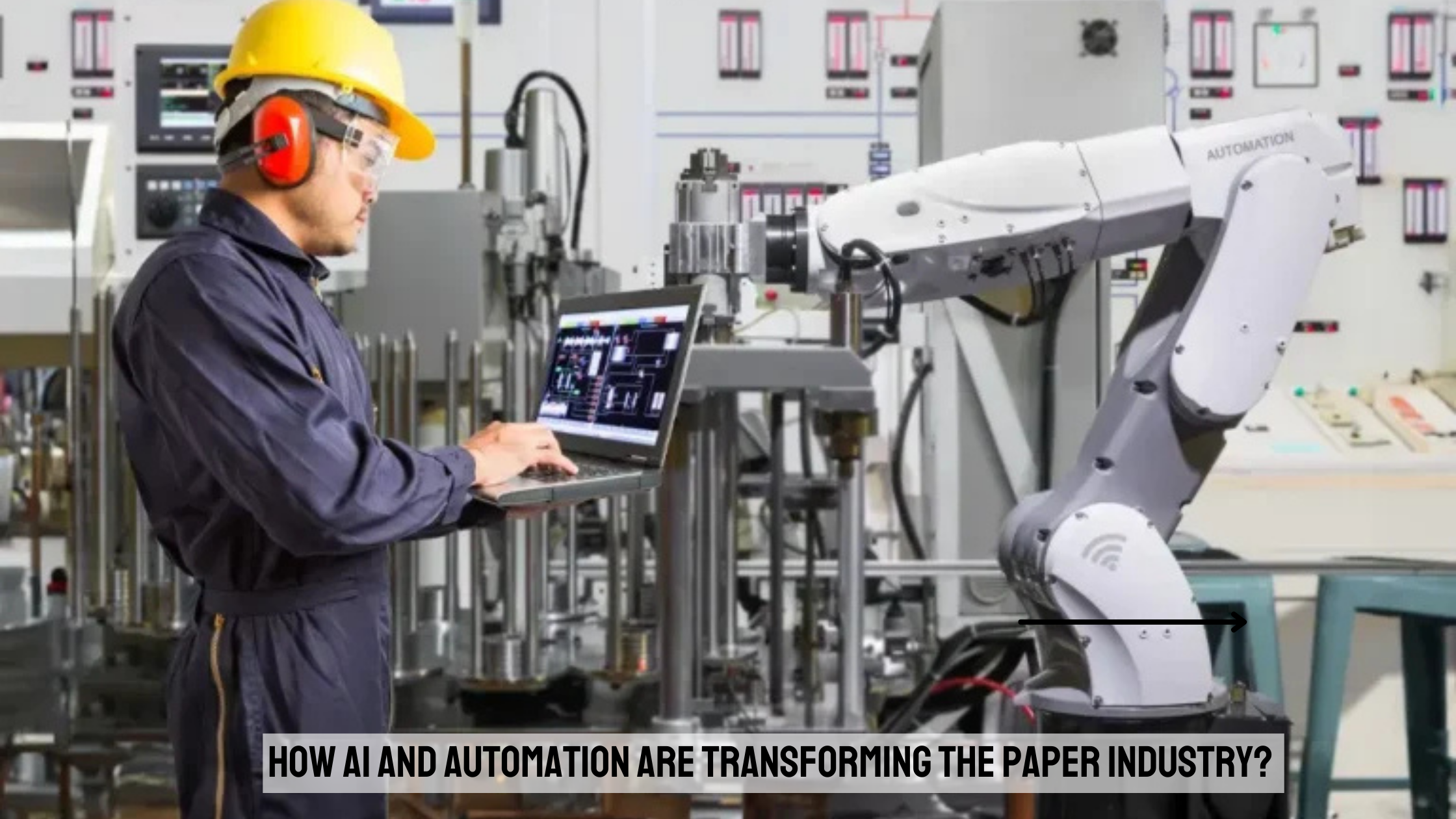
The paper industry is undergoing a significant transformation, thanks to the rise of cutting-edge technologies like automation and artificial intelligence (AI). These innovations are not just passing trends—they are reshaping how paper manufacturing and mills operate, increasing productivity, enhancing sustainability, and reducing waste. In this blog, we explore how automation in paper industry operations is setting new standards for efficiency, quality, and eco-friendliness.
The Shift Toward Smart Paper Mills
Traditionally, the paper manufacturing process was labor-intensive and time-consuming. Today, however, paper mill automation has revolutionized the way facilities function. From raw material handling to pulp processing and sheet formation, every step is becoming more streamlined through intelligent automation systems. Technologies like sensors, PLCs (Programmable Logic Controllers), and SCADA (Supervisory Control and Data Acquisition) systems are now widely used to monitor and control equipment in real-time.
This integration of paper manufacturing technology has significantly improved operational precision. Automated systems can instantly respond to process variations, adjust settings for optimal performance, and ensure uniform product quality. Additionally, the ability to collect and analyze data in real time has enabled mills to reduce downtime, manage energy use efficiently, and implement predictive maintenance.
The Rise of Paper AI
One of the most groundbreaking advancements in the industry is the adoption of paper AI—the application of artificial intelligence to paper manufacturing operations. AI is being used to drive predictive analytics, real-time decision-making, and process optimization. Through machine learning algorithms, AI can analyze vast amounts of data collected from various stages of the production line to identify inefficiencies and suggest improvements.
For instance, paper AI can predict moisture levels in the paper sheet and automatically adjust the drying parameters, leading to lower energy consumption and a reduction in rejected batches. It can also forecast equipment failures based on vibration or temperature patterns, allowing operators to schedule maintenance proactively instead of reacting to unexpected breakdowns.
In addition to predictive maintenance and process optimization, AI contributes to quality assurance. It enables real-time quality monitoring through visual inspections, sensor data analysis, and anomaly detection, ensuring that each batch of paper meets stringent industry standards.
Key Benefits of Automation in the Paper Industry
The benefits of embracing automation in paper industry operations are numerous and impactful. These include:
1. Increased Efficiency: Automated machinery operates faster and with greater accuracy than manual systems. This boosts production capacity and ensures timely delivery of paper products.
2. Cost Reduction: By reducing dependence on manual labor and optimizing energy and raw material use, automation helps cut operational costs.
3. Enhanced Quality Control: Advanced paper manufacturing technology maintains consistent quality by eliminating variability and enabling precise control over every production parameter.
4. Data-Driven Decision Making: With integrated AI analytics, plant managers and engineers can make more informed decisions. These insights lead to continuous process improvements and strategic planning.
5. Environmental Sustainability: Automation contributes to eco-friendly manufacturing by minimizing waste, optimizing resource consumption, and supporting cleaner production practices.
The Future of Paper Mill Automation
As the global demand for sustainable and high-quality paper products increases, the role of automation in the industry will only grow. Future paper mills will leverage digital twins (virtual replicas of physical assets), AI-powered diagnostics, and cloud-based control systems to maintain competitive advantages.
The integration of IoT (Internet of Things) devices will also play a pivotal role in building connected paper production ecosystems. Machines will be able to communicate, self-diagnose, and adjust processes autonomously, enabling remote monitoring and control across various sites.
Moreover, smart automation will empower companies to meet regulatory requirements, improve supply chain transparency, and personalize product offerings based on customer data.
Conclusion
In an industry that has long relied on traditional manufacturing methods, the shift toward automation in paper industry operations, powered by AI, represents a groundbreaking evolution. Smart paper mills equipped with advanced paper manufacturing technology are now the future, offering higher productivity, superior quality, and improved sustainability.
By embracing automation and AI, paper manufacturers can position themselves at the forefront of innovation, remain competitive in an evolving marketplace, and contribute to a more sustainable world. The digital revolution is not just changing how paper is made—it’s making paper smarter.